
Selling equity to buy Facebook and Google ads is a bad deal for startups. Clearbanc offers a fundraising alternative. For fast-growing businesses reliably earning sales from their marketing spend, Clearbanc offers loans of $5,000 to $10 million in exchange for a steady revenue share of their earnings until its paid back plus a 6 percent fee. Clearbanc picks what merchants qualify by developing tech that scanns their Stripe, Facebook ads, and other accounts to asses financial health and momentum. It’s already doled out $100 million this year.
“As a business successfully scales, we continue to provide them ongoing capital” co-founder and CEO Andrew D’Souza tells me. “Our goal is the be the first and last backer of a successful business and save the entrepreneur from having to take hundreds of pitch meetings to keep their company funded.”
After largely flying under the radar since being found in 2015, now Clearbanc has some big funding news of its own. It’s now raised $70 million from a seed and new Series A round from Emergence Capital, Social Capital, CoVenture, Founders Fund, 8VC, and more with Emergence’s Santi Subotovsky joining the board.
“Venture capital has shifted. Instead of funding true research and development, today 40% of venture capital goes directly to buying Google and Facebook ads” D’Souza explains. “Equity is the most expensive way to fund digital ad spend and repeatable growth. So we created something new.”
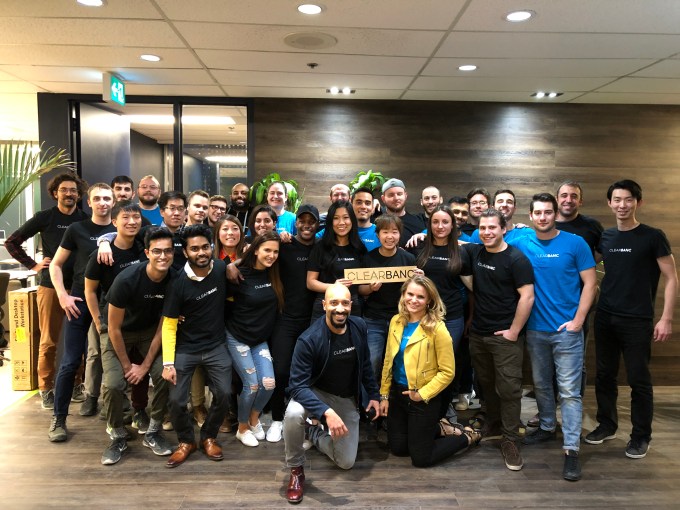
Clearbanc emerged from an angel investing alliance between two serial entrepreneurs. D’Souza had built Andreessen Horowitz-funded social recruiting site Top Prospect, USV-backed education tech company Top Hat, and Mastercard portfolio biometric authentication wearable startup Nymi. He’d helped raise over $300 milliion in venture after a stint at McKinsey. He had begun co-investing with Michele Romanow, a VC from Canada’s version of the TV show Shark Tank called Dragons’ Den. She’d bootstrapped shopping hub Buytopia that acquired 10 other ecommerce companies, and discount-finder SnapSaves that she sold to Groupon in 2014.
“We started investing together in some of the deals we would see from Dragons’ Den and often found that an equity investment wasn’t the right structure for these consumer product companies. They had great economics and had found a niche of customers, but often didn’t want to exit the business at any point” D’Souza recalls. “They needed money to acquire more customers, scale up their marketing efforts and online ad spend. So we started to do these revenue share deals.”
Both engineers, they built tech to automate the due dilligence and find companies with healthy unit economics and customer acquisition costs. The partnership blossomed into Clearbanc, and romance. “We’re also a couple, so we spend a lot of time together :)” D’Souza writes.
D’Souza and Romanow must have confidence in their tech, as a wrong investment means they might never get their cash back. “We pay a lot of attention to our underwriting and decision-making process because if we make a mistake, we can lose a lot of money. Unlike a VC, we don’t expect the majority of our companies to fail and have the winners make up for the losses.”
Now it’s poured over $100 million into 500 companie in 2018 like Vinebox. The subscription wine box company used Clearbanc to grow its membership numbers while raising a Series A for developing new products. Clearbanc’s companies pay out 5 percent in revenue share until the loan plus 6 percent is paid back. While riskier hard tech startups that will take years to get to market will still need to rely on venture, a new crop of direct-to-consumer products and other fast-monetizing startups that are already humming can avoid diluting their team and investors by using Clearbanc.